
The Truck May Be Fine. The Delivery Isn’t.
A freight trip through Chicago can come to a halt without a collision or mechanical breakdown. The tractor still runs, the trailer is on its wheels, but part of the shipment has moved out of place. I-94 cargo shift correction may begin with that simple problem: the truck is ready for the road, and the freight isn’t.
A load of pallets that has collapsed in transit may no longer be stacked properly. Machinery on a flatbed may have shifted away from its original tiedown position. The carrier now has to find out what can remain on the trailer, what needs to be moved, and whether the delivery can continue with the same equipment.
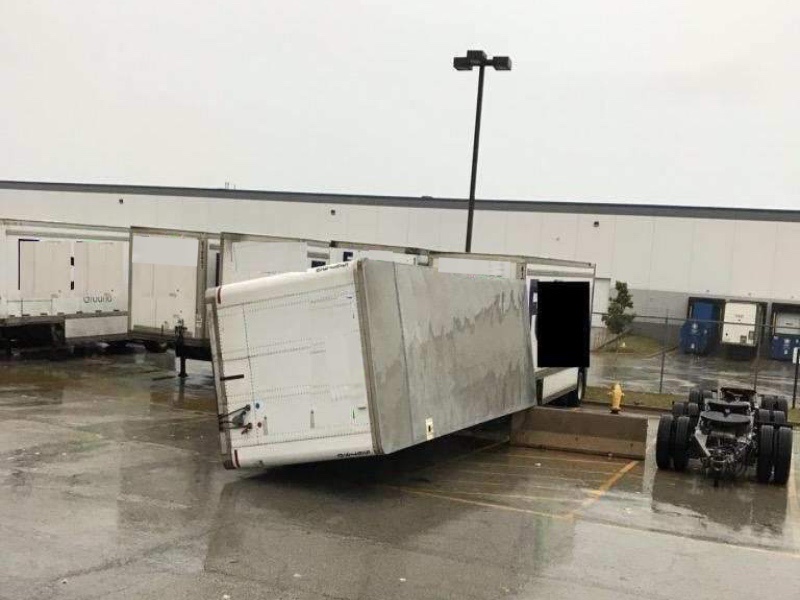
What Happens to the Freight?
A vehicle can be mechanically sound while the cargo inside it needs an entirely different plan. Once freight has shifted, a carrier may have to deal with damaged packaging, unstable stacks, and goods that can’t simply be pushed back into place.
A few displaced pallets might be reusable after the load has been properly handled and secured. Other freight may need to be separated for the shipper or carrier to inspect. If a shipment includes several types of goods, those decisions can get complicated. The recovery crew’s role is to make the handling and movement possible; decisions about the goods themselves belong to the responsible parties.
And the trailer has to be considered separately. If it has damage or can’t carry the load securely, straightening the freight won’t solve the transportation problem.
A Cargo Swap May Be the Practical Answer
Sometimes the original trailer is still usable. Freight can potentially be unloaded, reorganized, and secured again. Other times, the carrier may need a replacement trailer or a different place to handle the shipment.
That’s where a cargo swap comes in. The work may involve transferring the freight, supporting heavy items while they’re moved, and making room for a new loading arrangement. It also takes coordination between the recovery crew and the people responsible for the shipment.
There’s no point sending a truck on its way with a load that could shift again. Before departure, the freight has to be properly distributed and secured for travel.
Getting the Shipment Moving Again
For cargo recovery along I-94, we consider the freight and the available transportation together. A palletized load can present several handling options; a single heavy machine may call for a different lifting or transport plan. The decision isn’t always to put everything back where it started.
The carrier may be looking at three possible outcomes:
- Keep the original trailer: Reorganize and secure the freight if the trailer is still suitable for transport.
- Transfer the shipment: Move the cargo onto another trailer if the original is damaged or unable to carry the load safely.
- Separate part of the load: Set aside damaged or unstable freight for further inspection while arranging transportation for the remaining cargo.
With I-94 freight transfer assistance, coordinating the next trailer and a suitable work location may take as much planning as the physical move.
The Tractor, Trailer, and Cargo Are Separate Decisions
For shifted-load recovery near Chicago, the truck may need to be moved independently of the freight. A disabled tractor, damaged trailer, or equipment that cannot continue as configured may require heavy towing or transport arrangements.
North Shore Towing handles cargo swaps, heavy-duty winching, heavy equipment transport, and semi-truck decking and undecking. Those services give us several options when I-94 commercial cargo recovery involves more than one piece of equipment.
Our job is to help work out what needs to move, how, and in what order. A carrier may need a recovery unit, another trailer, or a place to stage the next part of the job.
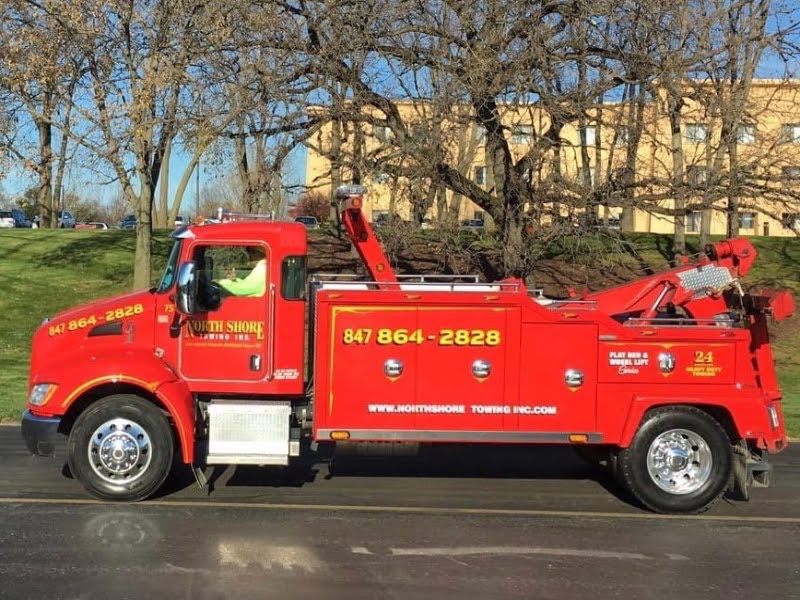
Freight Trouble? Call for North Shore Towing’s I-94 Cargo Shift Recovery Services
We’ve served Chicago, nearby suburbs, and parts of Indiana and Wisconsin since 1979. Our 30-truck fleet includes flatbeds, wheel-lift trucks, car carriers, and medium- and heavy-duty wreckers. WreckMaster-certified operators handle the recovery work, while our live dispatchers use GPS to select the closest suitable truck.
For freight recovery on I-94, we can help carriers address shifted loads and coordinate the equipment needed for cargo swaps or transport. Tell us what has moved, where the truck is, and whether the trailer is still usable. Those details help us work out a practical next move without assuming the entire shipment has to stay on the same trailer.
FAQ
A cargo swap involves transferring freight from one trailer to another. It may be necessary when the original trailer is damaged or the load cannot safely continue in its current arrangement.
Not necessarily. Depending on the condition of the shipment, some freight may be repositioned while other items require separate handling or inspection.
The carrier and shipper may need to inspect and document the damaged goods. Recovery crews can assist with handling or moving freight as appropriate.
Yes, depending on its condition. Some situations require the load to be removed before the trailer can be transported safely.
Yes. North Shore Towing provides semi-truck decking and undecking, heavy-duty towing, cargo swaps, and heavy equipment transport.
North Shore Towing serves Chicago, the surrounding suburbs, and neighboring areas of Indiana and Wisconsin.