
No Swap and Go
We have been answering calls since 1979. Believe us when we say: tire failures still catch drivers off guard. A trucker called us after a steer tire failed just past the Edens Junction on I-94. The driver expected a tire swap, but we found a bent rim, a fender torn into the wheel well, and a brake line hanging loose. That single blowout turned into an I-94 semi towing job because the truck could not move without dragging metal or losing air.
Tire failures on loaded semis do not always stop at the tire. Shredded rubber can hit air lines, ABS wiring, fuel tank straps, mudflaps, and suspension brackets. When a truck loses air pressure or cannot steer straight, a roadside tire change will not get that vehicle back on the road.
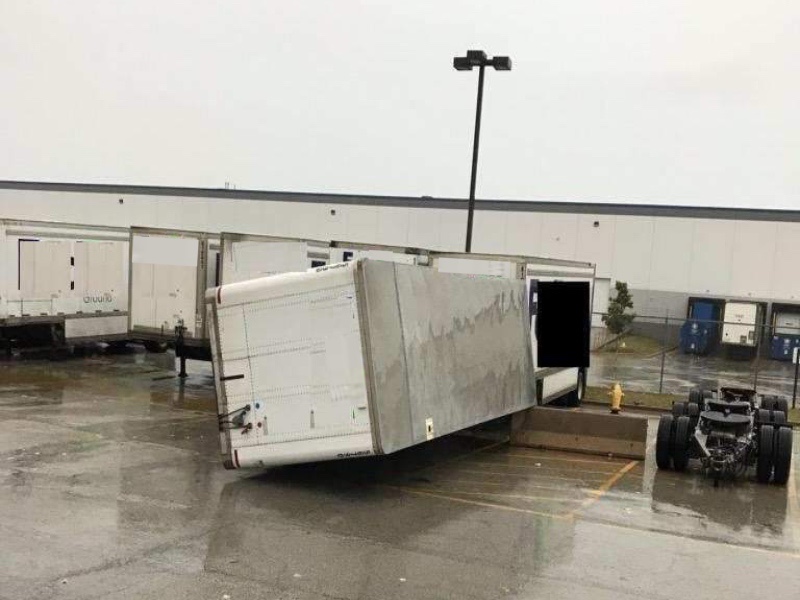
When Roadside Tire Service Works
A clean tire failure on a stable shoulder with good access can usually be handled by a service truck. The tech needs room for a jack, some distance from traffic, and a tire failure that did not damage other systems. A drive tire blowout on a wide shoulder near Gurnee or Waukegan may only need a replacement and a quick inspection.
The call changes when the shoulder is narrow, the truck is leaning into gravel, or the tire took out part of the brake system. We have pulled semis off I-94 after steer tire failures pushed fenders into the wheel well. We have also seen drive tire blowouts rip into air fittings and suspension mounts. At that point, the tire is no longer the main problem.
The Damage That Decides the Response
After a tire failure, we start with air and brakes. If the truck cannot hold air pressure, the brakes may not release properly. If a line is leaking or a fitting is torn, the driver should not try to limp to the next exit. A short move on damaged brakes can lock a wheel, ruin a rim, or create a fire risk.
Before anything moves, we confirm:
- Which tire failed
- If the truck can build and hold air
- If brakes, steering, or suspension are damaged
- If the trailer is loaded or empty
- How much shoulder space is available
- Where the fleet wants the unit taken
Cargo, Road Position, and the Next Move
A truck parked fully on a wide shoulder gives everyone more options. A rig near a ramp, leaning off the pavement, or stuck beside fast traffic near the Wisconsin state line gives us fewer. On I-94 semi towing calls, road position can matter as much as the tire damage.
Cargo changes the plan too. A full reefer, sealed trailer, hazmat load, or time-sensitive delivery may need a different response than an empty trailer. Sometimes the trailer stays with a backup tractor while the disabled unit goes to the shop. Sometimes I-94 semi towing means moving the full combination because the load cannot be transferred on the roadside.
The Checks Before Hookup
Before an I-94 semi towing hookup, we check air pressure, brake function, steering, suspension, and trailer condition. If the truck can roll without grinding metal or losing air, we may be able to tow it with the axles down. If the brakes are locked or the suspension is damaged, we may need to lift the axles or deck the tractor.
Dispatch plays a part before our wrecker arrives. Our dispatchers use GPS to route the closest heavy truck, then gather details from the driver or fleet. A call that starts as a tire failure can turn into a recovery, cargo swap, or multi-unit move depending on what we find. Good details help us send the right crew the first time.
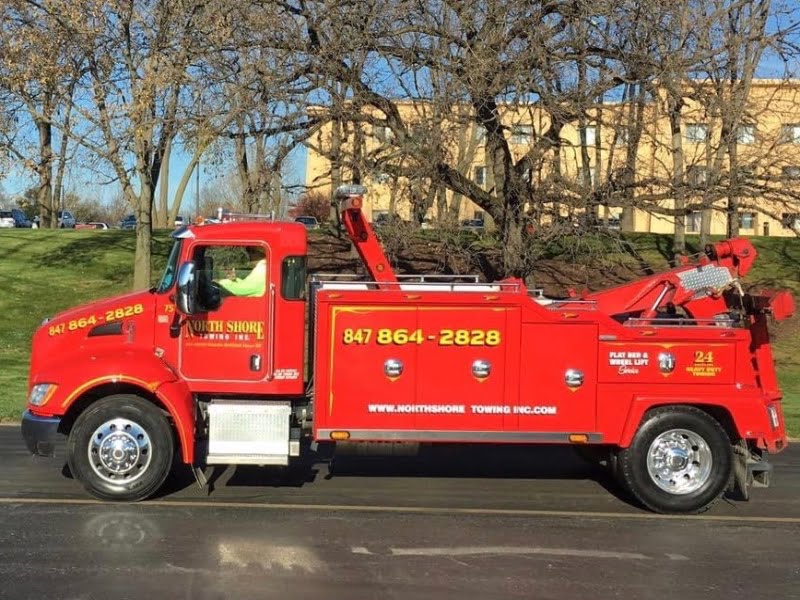
North Shore Towing: Professional Handling of I-94 Semi Towing After Tire Failures
North Shore Towing has been family owned and operated since 1979. We run a fleet of 30 tow trucks, including heavy-duty wreckers, flatbeds, and wheel lifts. Our WreckMaster-certified operators handle cargo swaps, heavy-duty winching, and semi-truck decking across the Chicago area, including Indiana and Wisconsin. Our I-94 semi towing work depends on asking the right questions before the truck ever moves.
When tire damage turns into brake damage, air loss, or a disabled tractor, we look at the whole scene. I-94 semi towing after a tire failure starts with the tire, then moves to road position, cargo, damage, and destination. That is how a driver gets off the shoulder with a clear next step instead of a bigger repair bill near the next exit.
FAQs
Can a steer tire failure damage more than the tire?
Yes. A steer tire blowout can bend the rim, tear fender panels, damage brake lines, and affect steering. If the truck cannot steer or hold air, it needs more than a tire replacement.
Why should a driver avoid limping a semi after a blowout?
Driving on damaged parts can make the repair worse. A locked brake, bent rim, or loose rubber can damage the hub, wheel end, suspension, and body panels.
What should a driver tell dispatch after a tire failure?
Give the nearest mile marker, travel direction, failed tire position, trailer type, load status, and visible damage. Photos help the towing crew plan before arrival.
Can a loaded trailer stay hooked during a tow?
Sometimes. If the trailer brakes, air system, and load are stable, it may stay connected. If the trailer has damage or the load needs transfer, the crew may separate it.
What does air pressure have to do with towing a semi?
Semi brakes depend on air pressure. If a tire failure tears an air line, the brakes may not release correctly or may drag during movement.
When does a tire service call become a towing call?
It becomes a towing call when the truck cannot move without causing more damage. Common signs include air loss, brake trouble, bent wheels, steering damage, or limited shoulder space.